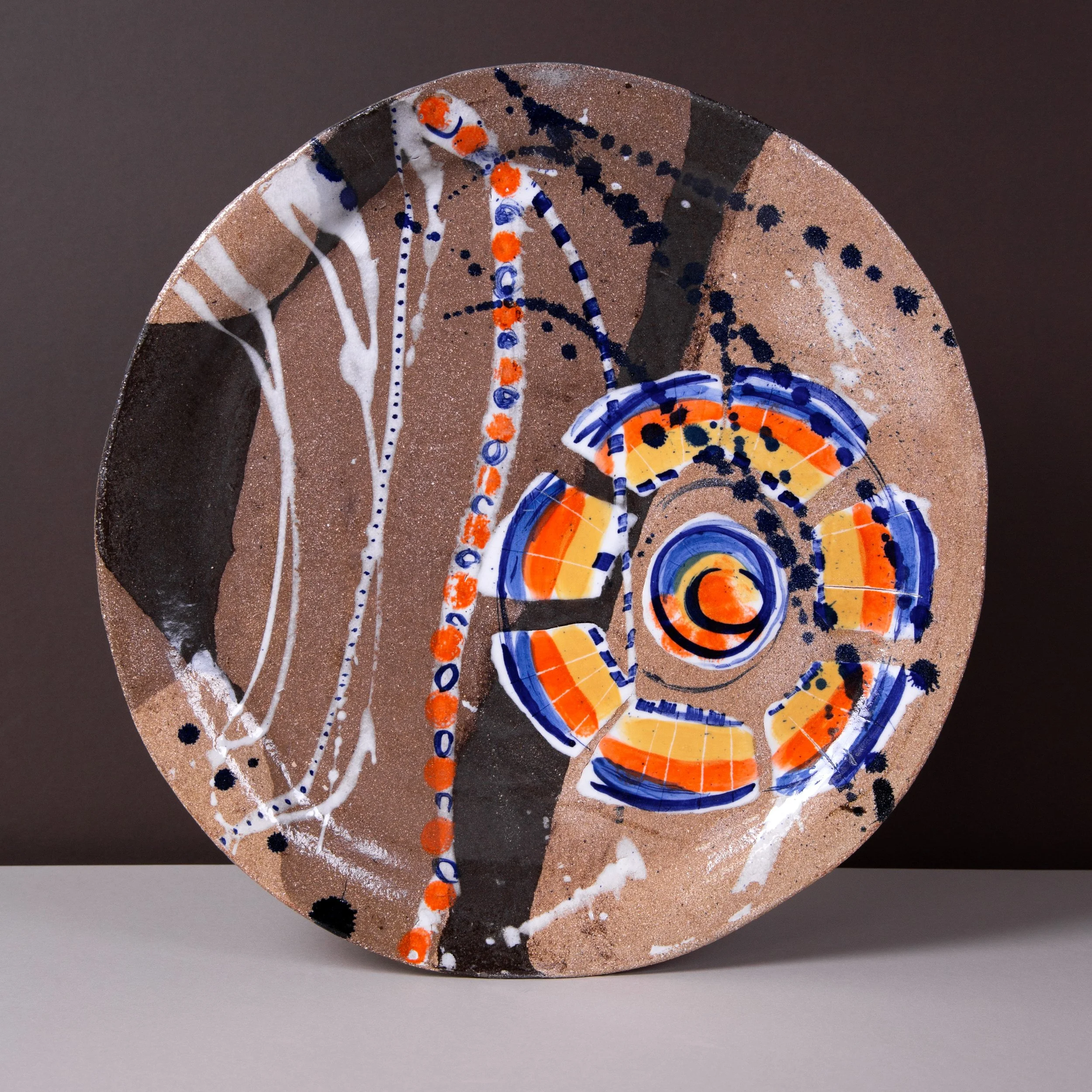

Blue + white
My ‘blue and white period’ started in an adult education class 12 years ago when I was introduced to using tin glaze with cobalt oxide. I was immediately mesmerised by the way the ‘black’ and highly toxic powdered cobalt oxide transformed into a deep mineral blue when fired.
I started experimenting with using this old craft skill in new ways . I set myself the goal of making 100 tiles by hand, and then tin-glazed and fired them. This allowed me to learn about the properties of clay, how to get tiles to dry flat and so on.I also taught myself the traditional image transfer technique of ‘poncing’ with ground charcoal through a pin-pricked outline. These images are then hand painted with cobalt oxide onto the tin glaze –a delicate job because the tin glaze is powdery and mistakes cannot be corrected.


I like the way traditional deft tiles often reflect everyday life and my ‘Elements of hip-hop’ series riffs on this idea -by combining a 16th century technique with modern iconography.


Tile
Bowl


Around this time I also developed a more gestural style where simple mark-making, brushstrokes and splatters allowed the blue and the white to take ‘centre stage’.
Beads
Plate
I have used this style in my own kitchen tiles and also in some collaborative work using porcelain with a silver smith friend Chloe Paull, to make silver and porcelain jewellery https://www.chloepaull.com/about


Kitchen Tiles – Easton Bristol
Some examples of my blue and white period work... made in collaboration with Arborhouse Bristol https://arborhouse.co.uk/

‘Elements of hip hop’ table

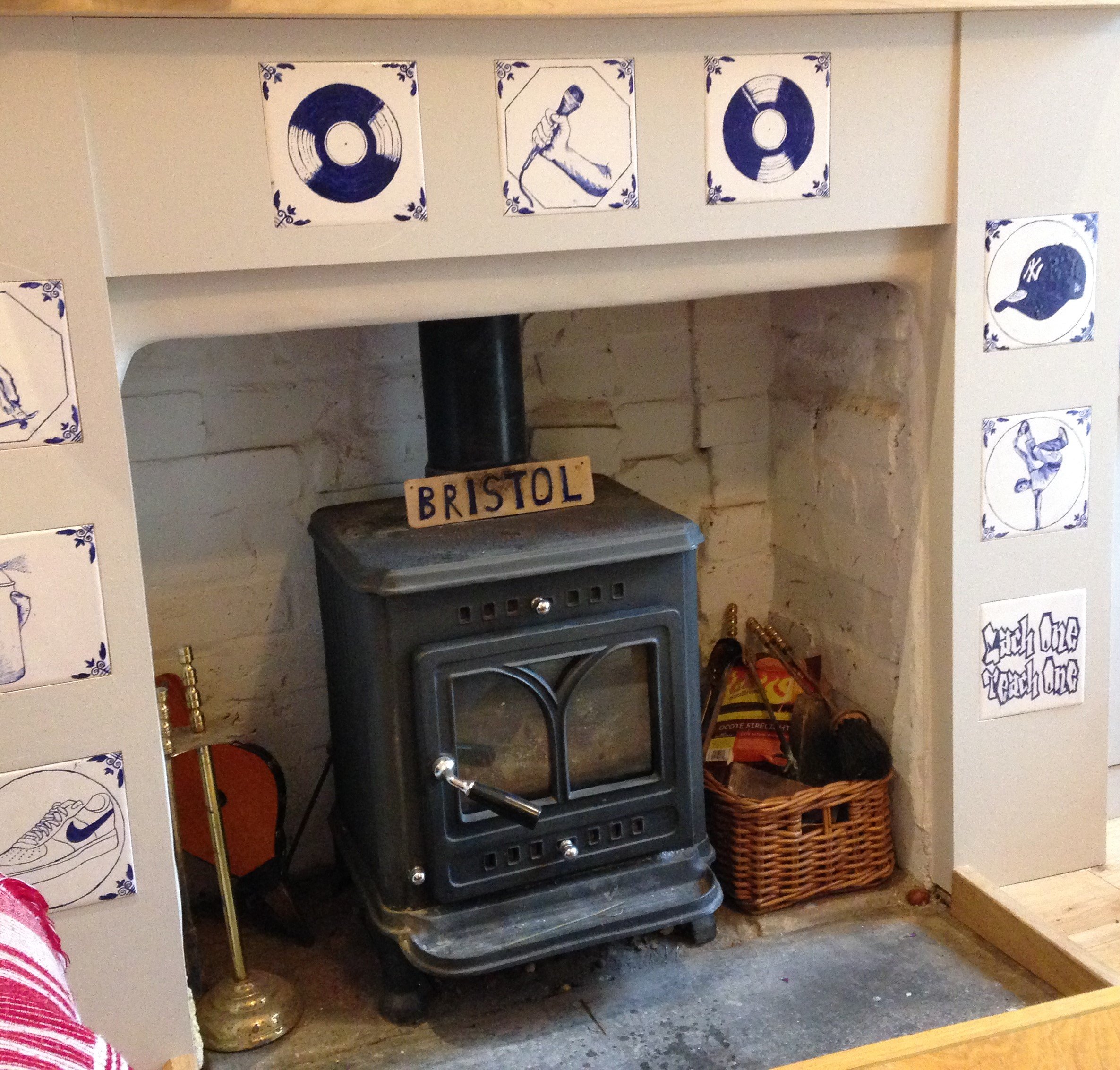
Fireplace - Easton Bristol – ‘elements of hip-hop’
In 2014 I visited Delft which evolved into a broader interest in the history of blue and white china and the efforts of European potters to reproduce Chinese porcelain from the 16th century onwards. This in turn led to the next bit of my clay journey where I have explored ideas around cultural exchange and the post-colonial imagination. See ‘Mongrel Culture’
Although I am currently not doing much blue and white work it was through a deep engagement with the techniques and craft processes of ‘delftware’ that I learned most of my ceramic craft. I’m happy to discuss commissions.
Arborhouse founders Theo Weywood and Mon Merttens have now ‘moved on’ in their craft design journeys but are both still making beautiful things and can be contacted through their website. https://arborhouse.co.uk/
Mongrel Culture
Learning about the interwoven histories of blue and white ceramic traditions in Europe and China was a starting point for a more experimental approach to my work. The narrative that was emerging more clearly for me at this point related to my identity as a mixed-race Member of the British Empire and ‘the Silk Roads’ in particular.
Dual-heritage plates 2017


I combined different clays to hand build large pots and plates and then experimented with surface decoration using cobalt oxide which has been used to decorate ceramics for at least 2600 years. The work variously references the iconic blue and white traditions of Chinese porcelain from the Tang and Ming dynasties , Dutch ‘Delftware’, English Willow Pattern, Portuguese Azulejos and so on. It also implies a rich history in the trade of goods and cultural exchange between East and West.


Different clays were rolled and bonded together, and then used to make fired work.
Being curious about what happens when different clays and oxides from around the world are put together like this, means that the cracks and imperfections are all of interest.


‘Mongrel’ Platter 2019

‘Post-colonial’ Pot 2019
‘Mixed-Up’ Plate 2019
The invitation is to ‘look again’ and to see something that is both familiar and new. This work is experimental and playful – integrating traditional materials and craft techniques with a modern attitude and aesthetic.
Broader themes implicit in this work include celebrating the diverse heritage of post-colonial Europe and the idea that it is in ‘the holy places where the races meet’(1) and the arguably ‘superior intelligence’(2) of the ‘mongrel imagination’ that the future of a better Europe lies.
Interestingly, when trying to source ‘pure’ clays to represent worldwide clay traditions I learned that potters rarely use a single source for the clay they work with. The quest for purity is neither desirable or easy and most clays are blended into a ‘clay body’. Just as the human gene pool is infinitely mixed so too are our cultural artefacts.
(1)Leonard Cohen (1992) ’ Democracy’ -The Future
(2)Research has shown that mongrel dogs are healthier and more ‘intelligent’ than so called pure breeds BUT please note I’m using this as a metaphor not some sort of pseudoscientific extrapolation .


Artists Palate ‘Lockdown’ Tableware
We use this tableware everyday at home – which makes every meal and cup of tea feel special. If a piece gets broken- rare because its high fired stoneware - I simply make a replacement. It’s been a fun project and I have been thrilled at how popular it is. I’ve sold lots of pieces, and have some loyal customers who keep coming back for more -particularly the seconds or when I’m having a clear out! This really helps with paying for my studio costs so a big thank you to everyone who has bought some of my Artists Palate Tableware.
Each piece is hand painted. No two pieces are the same. Prices are between £15 and £85 . If you would like something, and you are not in a rush do contact me by email to see what’s available or possible.

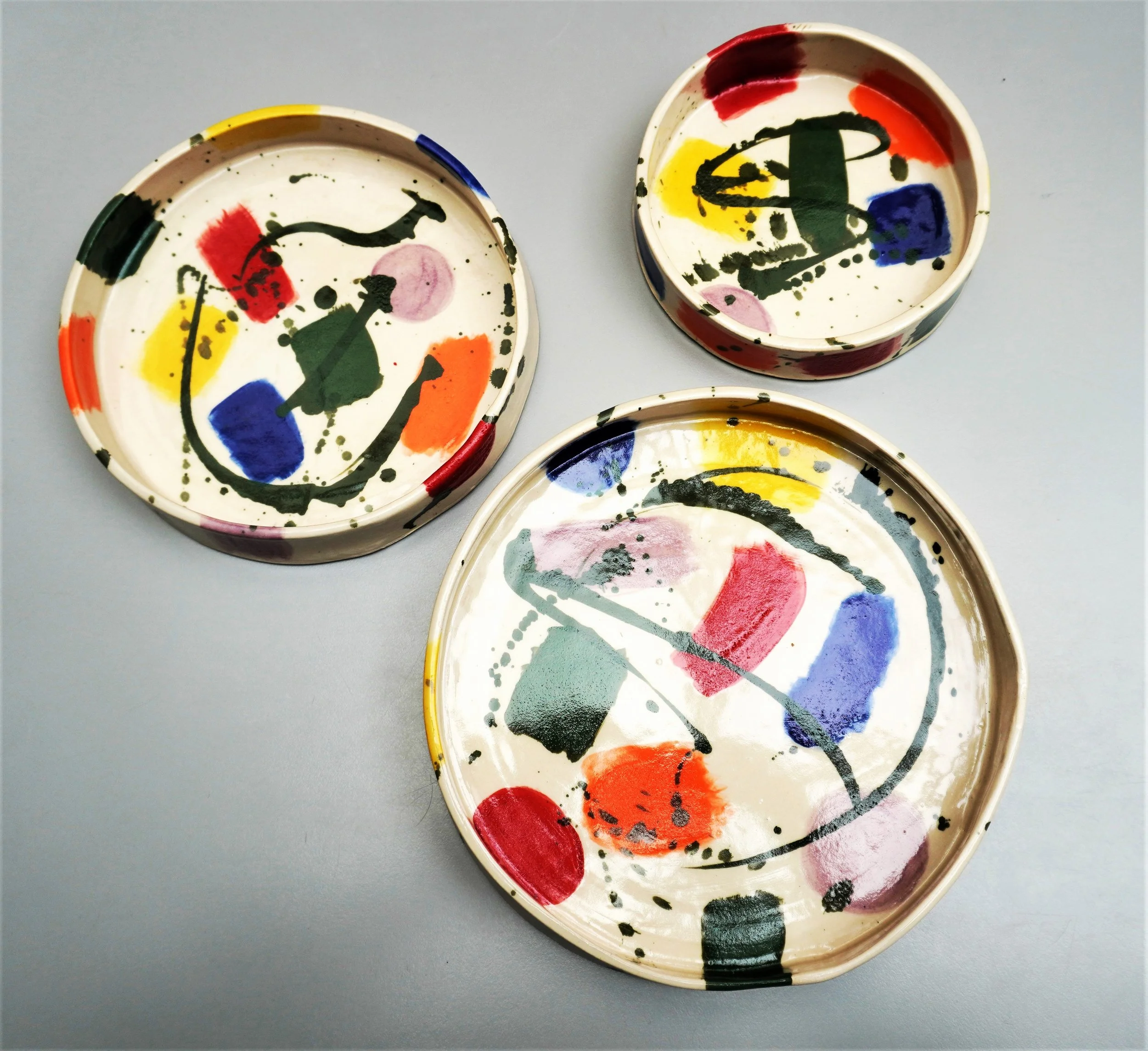
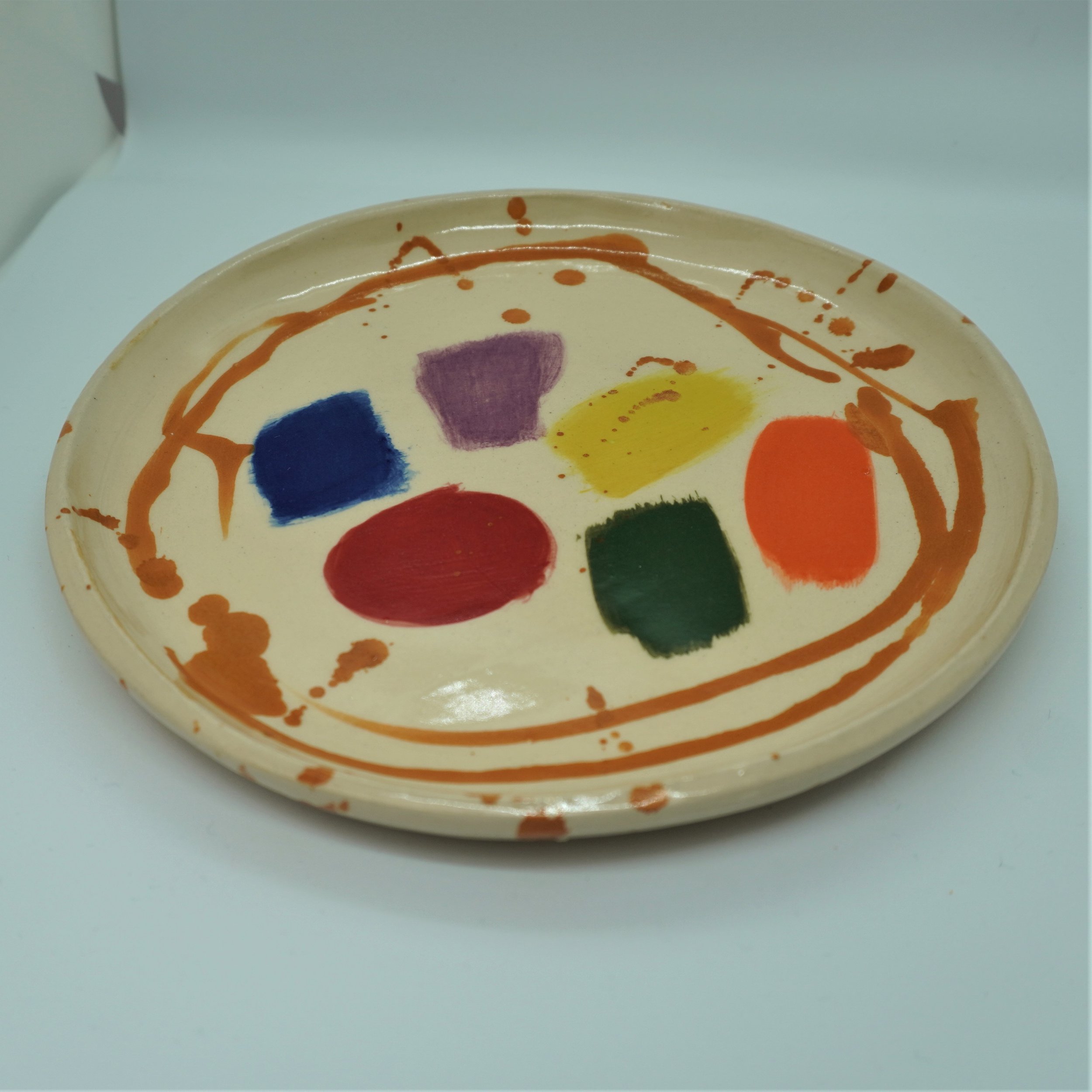


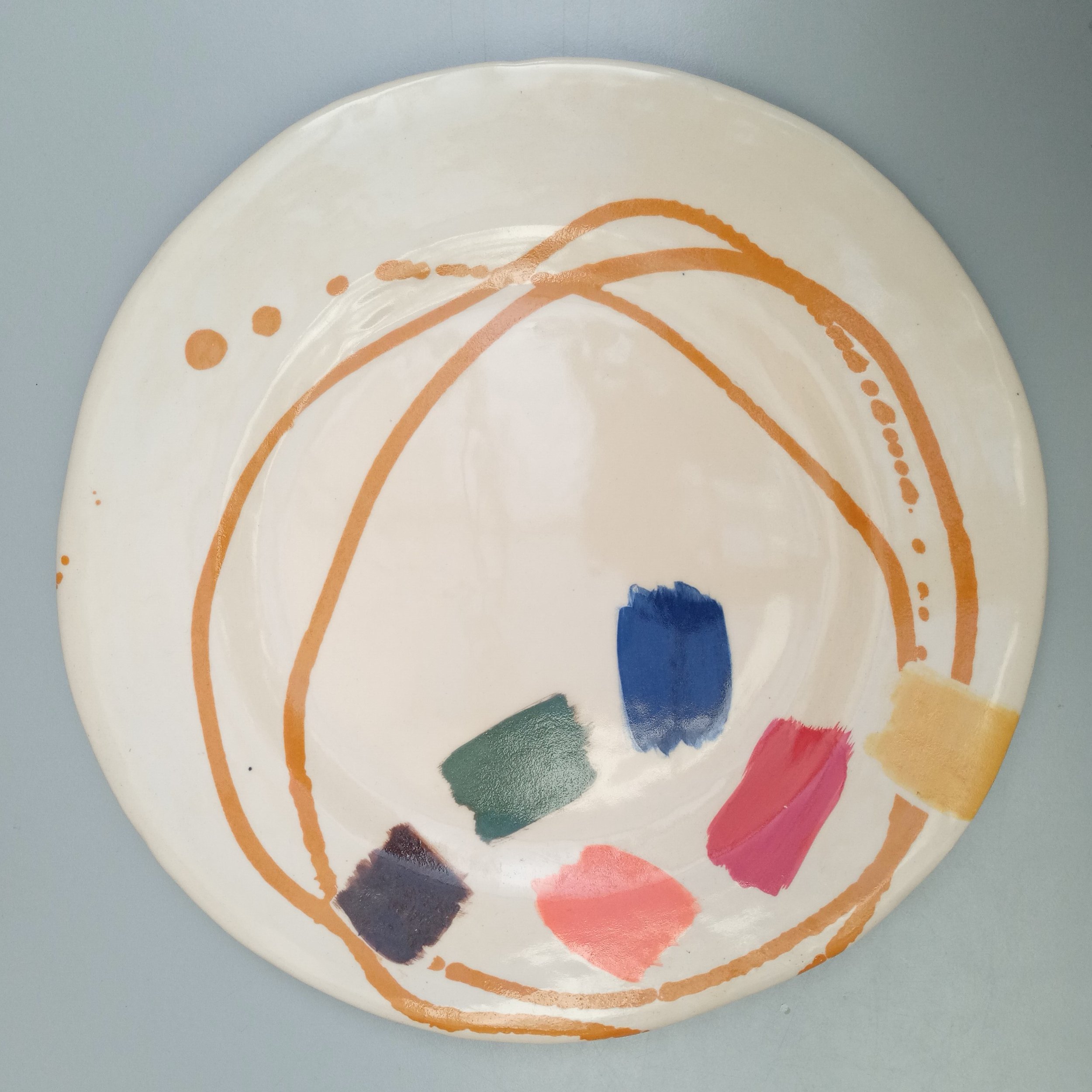


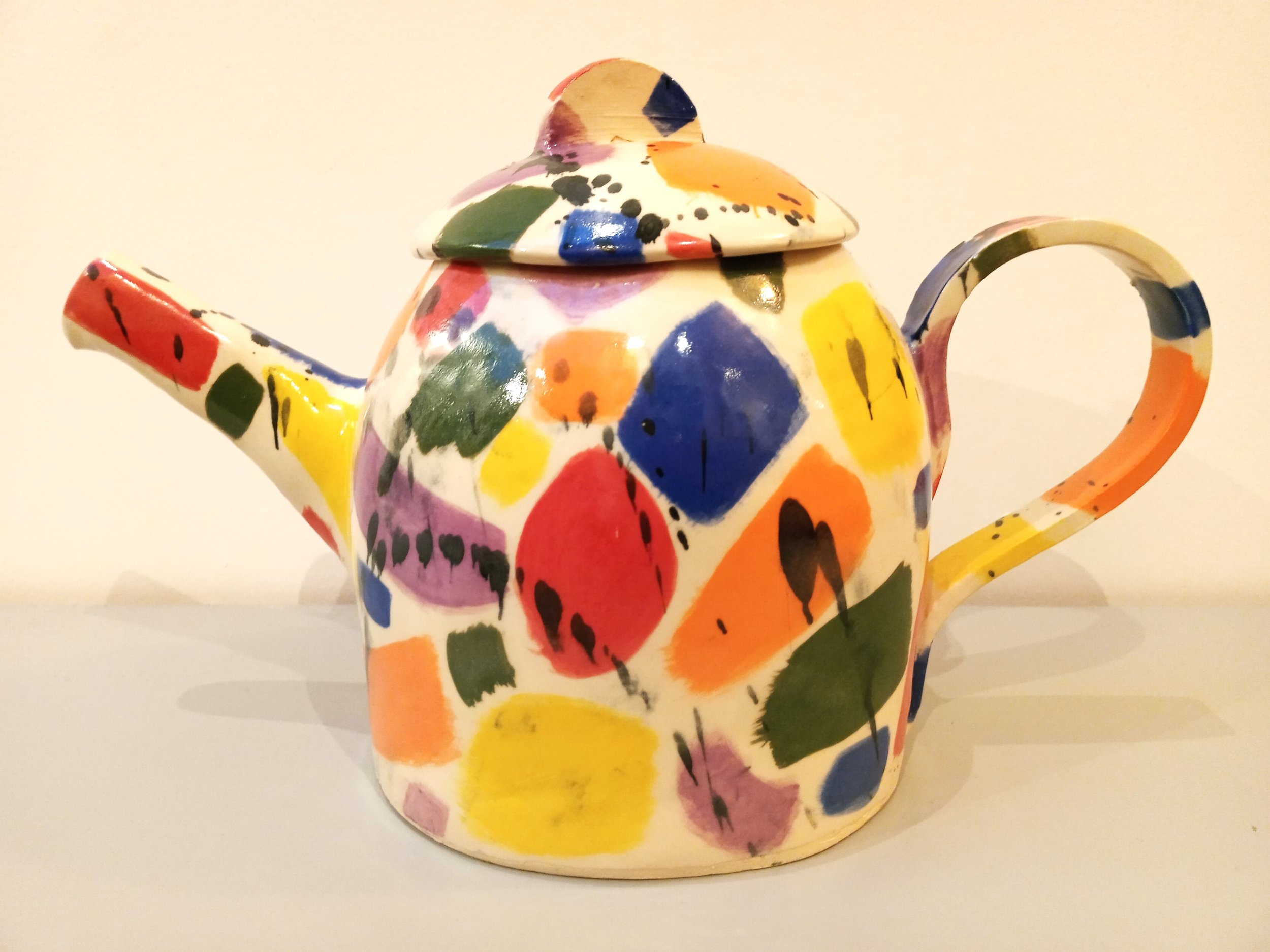

About this work..
Functional work isn’t really my ‘thing’. Nonetheless, at the start of the second COVID 19 lockdown in November 2020 I stopped going into my studio, took a bag of clay home and started making a ‘table-for-two’ dinnerware set. My husband and I used this to celebrate his birthday (also Christmas Day) quietly together.
I made two plates, two bowls and two tumblers. Everything was handbuilt and made using ‘found’ household objects - a rolling pin,a tray, cardboard tubes, plates as moulds and so on. The surface decoration was based on some work from an old sketchbook where I had explored mark-making through brush strokes and colour-mixing.
After Christmas we went into our third lockdown and I continued the project - all the while waiting to be inspired about the ‘Real Art’ that I would eventually make for my Bristol Clay Exhibition in November 2021! However, by the end of the third lockdown it had become clear that this wasn’t going to happen. Like everyone, my world had become smaller. My usually personal/political art making had become more domestic and housebound.
I became curious about my resistance to the idea of utility in art-making and more accepting of my creative process and how I was expressing myself at this point. I played with the poetics of artists palette/palate and the idea of ‘taste’ both in relation to ‘fine art’ and in our domestic worlds. I started to feel more ‘at home’ with the idea of making tableware !
As I worked my mind would wander.... missing meals with friends, imagining post-lockdown gatherings and reflecting on the importance of food, families and community. In the quiet of my kitchen the meaning of ‘breaking bread’ and the idea of a sort of deconstructed secular ‘Holy Communion’ emerged.
The theme took shape partly in response to Government pandemic guidance on social gatherings. This was often confusing, but two messages that seemed to be clear for extended periods were ‘The Rule of Six’ and being allowed up to thirty people at a wedding or funeral . Making a set of tableware for six, matched the number of people who had typically sat around our dining room table when our four children were younger. Similarly, because thirty people had somehow become the boundary of our new world order I made drinks tumblers for thirty. ‘Cheers! ‘
